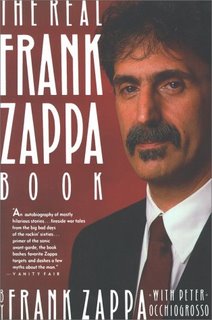
 Not only have I had a very interesting adulthood, but I was also lucky to have a very interesting childhood. Sure there were the typical good times and bad times, and there were things I wish I would have done different (like learn to play guitar). But all that aside, My dad taught me to really appreciate music. All sorts of music. In the 70s he would play Frank Zappa alongside Alice Cooper, Black Sabbath, Ry Cooder, Commander Cody and others and when the 80s hit we became fans of the Talking Heads, Devo and others.
As I grew older I came to further develop this appreciation by learning to love classical music, real hard core blues and more. It all goes back to Frank Zappa. Seriously. Many folks who hear the name Frank Zappa only think of such songs as "Yellow Snow," "Dinah Moe Hum" or even "Valley Girl." Not to mention the unmentionable titles that described various female body parts. For those folks that think of Frank Zappa as only a "potty-mouthed" hippy singer...you've got it wrong....WAY WRONG. His greatest works are typically instrumental songs like "Peaches en Regalia," or relatively harmless songs like "Inca Roads." This book describes the best features of Zappa that were constantly overlooked.
Frank Zappa passed away in 1993. (As a side here, in college a friend of mine Jim Damm and I hosted a 6 hour tribute to Zappa on the college radio station, WIDB in Carbondale, IL the night after his death.) He was just in the process of seriously announcing his candidacy for U.S. president, but he found out, too late, that he had prostate cancer and passed away before this could be more than a mention on some talk show. This book was published in 1988. In early 1990, Zappa visited Czechoslovakia at the request of President Václav Havel, a lifelong fan, and was asked by Havel to serve as consultant for the government on trade, cultural matters and tourism. Zappa enthusiastically agreed and began meeting with corporate officials interested in investing in Czechoslovakia. Within a few weeks, however, the US administration put pressure on the Czech government to withdraw the appointment. Havel made Zappa an unofficial cultural attaché instead. So this book doesn't cover the political career of Frank Zappa, but it does have several chapters that show he was getting started.
One of the very unique aspects of this book is that it is the ONLY book about Frank Zappa written by Frank Zappa. On the back cover there is a quote from the New York Post that says, "This book belongs in Every Home." I would have to agree with that. Not for the informative look at his early career, but for the views and opinions on politics, censorship and over-organized religion.
The breakdown of the book by chapters looks like this:
The first 7 chapters cover his career and how he came to do what he did with music and performance art, with some great anecdotes about being on the road with The Mothers of Invention. Chapter seven had me rolling with laughter. This Chapter was about the indecency hearing Great Britain held concerning his Orchestral performance for what would be the movie "200 Motels" starring Theodore Bikel, Ringo Starr, Keith Moon and, of course, The Mothers. Apparantly a stage hand had filed a complaint about some of Zappa's lyrics. Which I should note here, his lyrics were all about absurdism. So this chapter takes the court record and reprints it. The funny part is the setup of all the old Brittania Judges (old men in white wigs) reading and trying to determine the lyrics of many of Zappa's songs and Zappa explaining to the best of his ability, I'm assuming while trying to not crack up laughing.
The next chapter of the book is a very in depth look at music. Including scoring compositions for orchestras and the many headaches involved. At this point Zappa explains the personalities of musicians and how they relate to the instrument they play.
The last part of the book is spent on politics, including the famous PMRC hearings in the 80s on Capitol Hill. Frank shares his knowledge of why the wives of senators wanted legislation on music and why certain senators' wives were the ones wanting said legislation. He ventures to say that Tipper Gore was funding what looks like would be a run for presidency for her husband...and this book was 1988?
If you want some fun rock and roll info with some great political discussion and debate thrown in....this is the book for you. I'll tell you Zappa is not what you think...even if you think you know him.


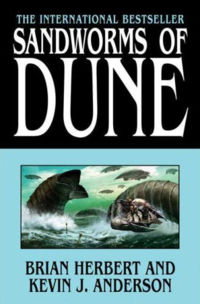 The Dune chronicles have come to a close with this final book in the series, "Sandworms of Dune." Frank Herbert created a great novel in the original "Dune" and then continued with 5 more books covering the philosophies and adventures of the planet Arrakis or Dune. Dune is the only place in the universe where Spice Melange was to be found. "He who controls the spice, controls the Universe." The Spice was needed for Guild Navigators to be able to fold space, enabling travel throughout the universe in the blink of an eye. Spice also was known to bring about psychic prescience in some individuals. The Spice is what gave the Bene Gesserit witches their powers. Finally Spice was known to prolong life. Spice was the commodity to be traded instead of coin in Frank Herbert's "Duneverse."
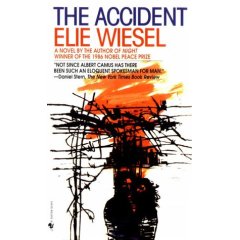 This is the 3rd and final book in the series written by Elie Wiesel. The first book being the Nobel Prize winning, "Night," which was the author's account of the holocaust. The second was a story of a holocaust survivor coming to grips with the terrors experienced in the holocaust by becoming a freedom fighter in Palestine.
 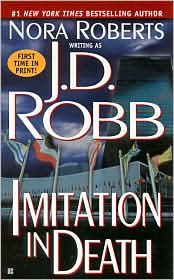 Once again I've read a Nora Roberts book and well I'm happy to say so...okay, sure it is her writing as J. D. Robb, and sure it's not her normal genre but wow she can weave a great sci-fi/mystery/thriller when she puts on the pseudonym cap.
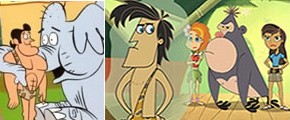 I remember sitting back with my bowl of Freakies cereal on weekday afternoons as soon as I got home from school and watching a full day (okay yes it was just the afternoon but it seemed like all day as a kid) of great cartoons. One of my favorites was George of the Jungle. I mean c'mon who couldn't resist singing along: "George, George, George of the Jungle, watch out for that tree. Aaa Ahhh Aaagh!" I remember vaguely when it was on Saturday mornings, but in the 70s it was in syndication and I got to see it after school, and yes my afternoon snack was cereal.
 "Dawn" is the second book in the "Night" trilogy that covers the philosophical gamut of humanity. In "Night," Wiesel's Nobel Prize winning novel, the reader relives Wiesel's real life in the German concentration camps of Auschwitz and Buchenwald but portrayed in novel form. "Dawn" covers the character Elisah's life after World War II and again finds the question of humanity at the forefront.
 What if someone told you you could experience love, sex and intimacy as you've never imagined it in just 30 days. Would you be interested? Dr. Ian Kerner is a sex therapist and has created a formula and system to "fix" the average American's sex life in just 30 days.
 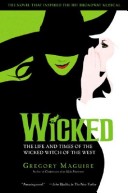 Borrowing aspects from the "Oz" books by L. Frank Baum and the "Wizard of Oz" movie Gregory Maguire tells the story of the "Wicked Witch of the West." In this book we learn that the witch was not the wicked one only a side affect of a very superstitious land of Oz, and the political conspiracies of the Wizard of Oz. The wizard is the one to be made out as the bad guy. Where does Dorothy come in? Well, she is merely a pawn for the Wizard to sacrifice so he can have Elphaba (The Wicked Witch of the West) killed and he won't have to worry about a hostile takeover of his regime.